


 The
temple of Zeus in Athens. During the Turkish occupation, many of the columns were
pulled down to cut up for use in building houses.
The
temple of Zeus in Athens. During the Turkish occupation, many of the columns were
pulled down to cut up for use in building houses.April 15
The
temple of Zeus in Athens. During the Turkish occupation, many of the columns were
pulled down to cut up for use in building houses.
 Hadrian's Arch. This arch divided the old Greek
Athens from the Athens built by the Romans.
Hadrian's Arch. This arch divided the old Greek
Athens from the Athens built by the Romans.
 Here you can see an interesting difference in
attitude between Athenians and Americans. Rather than capturing and putting strays
to sleep, the Athenians have public welfare for stray animals.
Here you can see an interesting difference in
attitude between Athenians and Americans. Rather than capturing and putting strays
to sleep, the Athenians have public welfare for stray animals.
National Archeological Museum


 On the right is a
Roman copy of the Athena that was in the Parthenon. On the left is a large bust of
her.
On the right is a
Roman copy of the Athena that was in the Parthenon. On the left is a large bust of
her.
 Our guide, Kathryn, was a delightful help.
Having someone to guide your observations in a large museum helps to prevent fatigue.
Our guide, Kathryn, was a delightful help.
Having someone to guide your observations in a large museum helps to prevent fatigue.

 When Schliemann discovered this mask during his excavations of Mycenae
during the nineteenth century, he remarked, "I have looked upon the face of
Agamemnon." On the right are weapons that were also found at Mycenae.
During the Homeric period, Mycenae was the most influential city in Greece. They
even sent more ships than either Sparta or Athens. Seeing the ruins from Mycenae
gives you a good picture into life during the Homeric period. Many of the following
pictures are from the Mycenae room in the museum, so let yourself think of the various
Homeric characters using articles just like these in their daily lives.
When Schliemann discovered this mask during his excavations of Mycenae
during the nineteenth century, he remarked, "I have looked upon the face of
Agamemnon." On the right are weapons that were also found at Mycenae.
During the Homeric period, Mycenae was the most influential city in Greece. They
even sent more ships than either Sparta or Athens. Seeing the ruins from Mycenae
gives you a good picture into life during the Homeric period. Many of the following
pictures are from the Mycenae room in the museum, so let yourself think of the various
Homeric characters using articles just like these in their daily lives.
 This necklace contains the double eagle motif from
Delphi. The location of Delphi was discovered when Zeus let two eagles go on
opposite ends of the earth and then marked where they meet. The double-eagle motif
was used many times again through history- for instance, it was used as a symbol in the
Austrian empire.
This necklace contains the double eagle motif from
Delphi. The location of Delphi was discovered when Zeus let two eagles go on
opposite ends of the earth and then marked where they meet. The double-eagle motif
was used many times again through history- for instance, it was used as a symbol in the
Austrian empire.
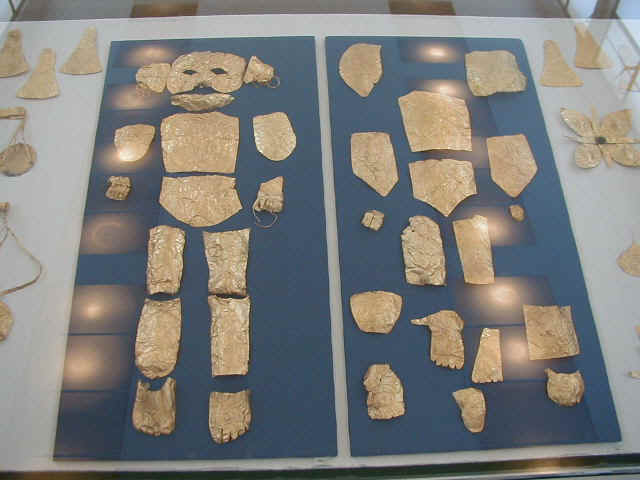 Schlieman was convinced that the mask above was
that of Agamemnon because he also found these two burial figures near the tomb he found
the mask. The woman with whom Agamemnon returned from Troy, Cassandra, had a pair of twins
whom Clytaemnestra killed when she murdered Agamemnon and Clytaemnestra.
Schlieman was convinced that the mask above was
that of Agamemnon because he also found these two burial figures near the tomb he found
the mask. The woman with whom Agamemnon returned from Troy, Cassandra, had a pair of twins
whom Clytaemnestra killed when she murdered Agamemnon and Clytaemnestra.
 The Mycenean crown was quite large and covered with
gold gilt.
The Mycenean crown was quite large and covered with
gold gilt.
 The warriors at Troy most likely wore helmets of
boar's tusk.
The warriors at Troy most likely wore helmets of
boar's tusk.
 Ancient clothes-pins!
 Frescos from the wall of the palace
 The writing used at Mycenae was "linear
B". Later they adopted a form of the Phoenician alphabet.
The writing used at Mycenae was "linear
B". Later they adopted a form of the Phoenician alphabet.


 The jewelry worn
by the women of the time was amazing. Modern jewelers say that many of the
techniques have yet to be repeated.
The jewelry worn
by the women of the time was amazing. Modern jewelers say that many of the
techniques have yet to be repeated.
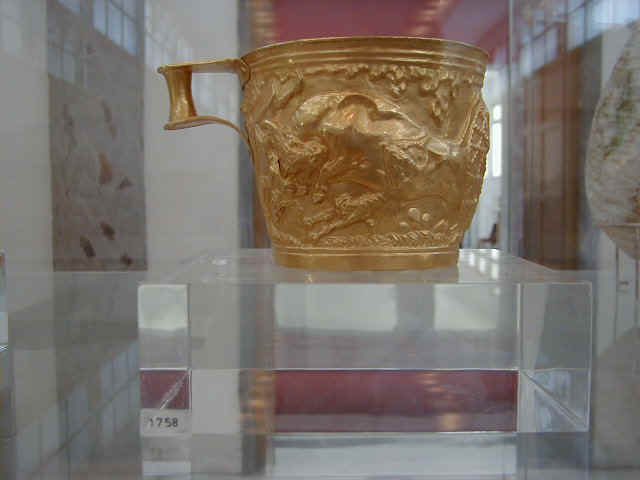


 Many of the gold utensils found at the site.
 I had often seen these pots with pointed bottoms
and wondered what they were for. We found on our tour that they were actually for
shipping. The pointed bottom allowed them to be stored in holes in planks and thus
would not tip in a storm.
I had often seen these pots with pointed bottoms
and wondered what they were for. We found on our tour that they were actually for
shipping. The pointed bottom allowed them to be stored in holes in planks and thus
would not tip in a storm.
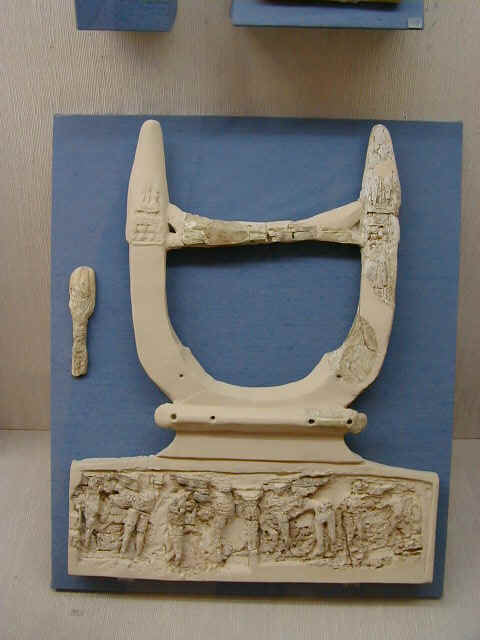 Ancient lyre. One of only musical
instruments to survive from antiquity.
Ancient lyre. One of only musical
instruments to survive from antiquity.
 This small piece was carved from layered marble.
 These two columns stood on either side of the
Tholos tomb.
These two columns stood on either side of the
Tholos tomb.
 The spiral motif was common and stood for the
Myceneans belief in the eternal repetition of life.
The spiral motif was common and stood for the
Myceneans belief in the eternal repetition of life.
 The bear jar. The ancients did have a sense
of humor.
The bear jar. The ancients did have a sense
of humor.
 Crown
Crown
End of Mycenae room

 Before the Mycenae age was the Cycladic period. Pablo Picaso was
inspired by the art of this period.
Before the Mycenae age was the Cycladic period. Pablo Picaso was
inspired by the art of this period.

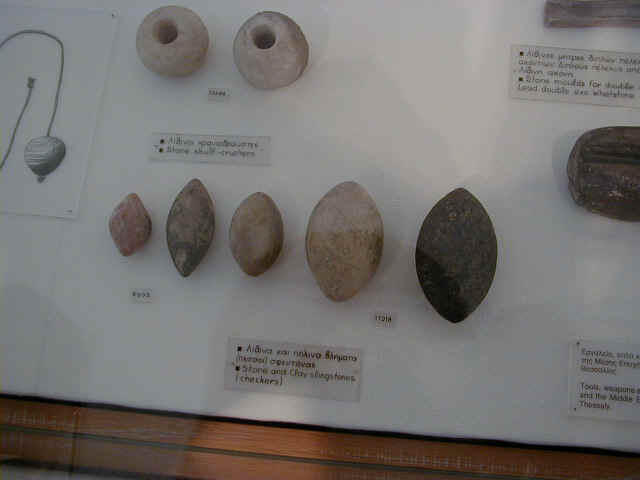 Clay and stone sling-shots.


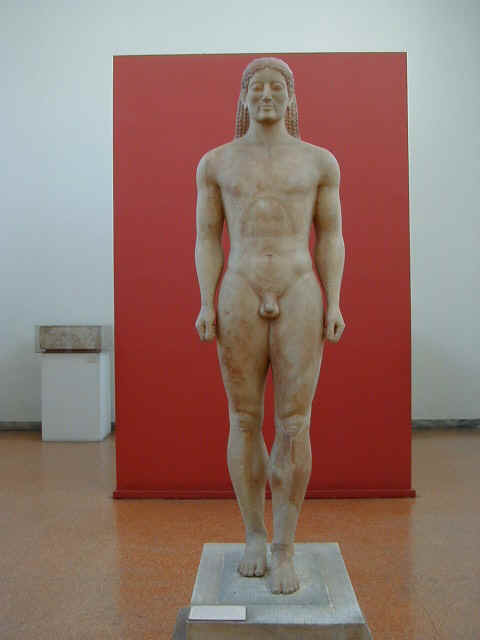
 Looking at these statues, you can see the development of Greek statuary.
Look for the progression in the following aspects: 1) Is the body static or in
motion? Are the feet planted flat? Are the arms locked at the side? 2) Is the
muscular structure shown? 3) Does the face show expression? Can you
differentiate an emotion? Or is the statue's facial expression distant? Can you see
a smile? 3) Is the statute clothed?
Looking at these statues, you can see the development of Greek statuary.
Look for the progression in the following aspects: 1) Is the body static or in
motion? Are the feet planted flat? Are the arms locked at the side? 2) Is the
muscular structure shown? 3) Does the face show expression? Can you
differentiate an emotion? Or is the statue's facial expression distant? Can you see
a smile? 3) Is the statute clothed?


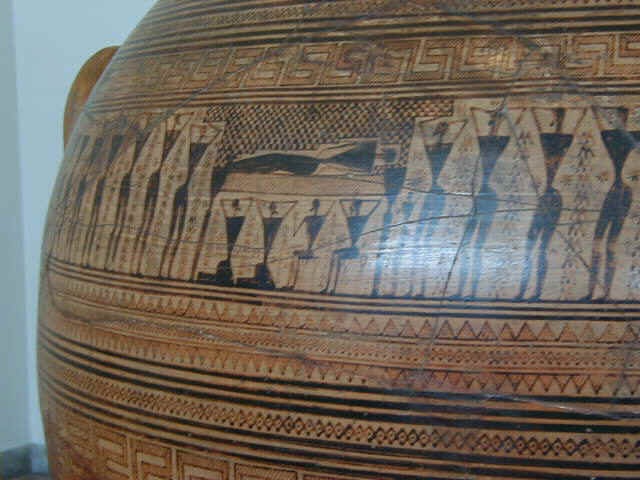 Very large urns in this style were used as grave
markers and held oil for the deceased. The detail depicts the deceased and those
mourning his death.
Very large urns in this style were used as grave
markers and held oil for the deceased. The detail depicts the deceased and those
mourning his death.


 There are many vases in the following pictures.
You will find them more interesting if you learn to identify these styles; (left to
right) geometric, black figure, red figure and luekos.
There are many vases in the following pictures.
You will find them more interesting if you learn to identify these styles; (left to
right) geometric, black figure, red figure and luekos.


 Grave stele
 Hermes leads a woman to Hades.

 The four horse chariot race- one of the most
exciting of antiquity.
The four horse chariot race- one of the most
exciting of antiquity.
 A symposium (drinking party)


 The Greeks have been able to recover a number of
statues from the bottom of the sea. Notice how the sea water has eroded the marble.
The Greeks have been able to recover a number of
statues from the bottom of the sea. Notice how the sea water has eroded the marble.
 Small Altar


 These frescos came
from the island of Santorini. It is delightful to see how creatively the ancients
decorated their homes.them
These frescos came
from the island of Santorini. It is delightful to see how creatively the ancients
decorated their homes.them
 Sieve
Sieve
 Tripod
 . Some symbols have an older origin than you might think.
 Beautiful geometric design
 On this vase, you can see a chariot race that was
held in honor of the deceased.
On this vase, you can see a chariot race that was
held in honor of the deceased.
 This is a model of a merchant's cart for selling
liquids.
This is a model of a merchant's cart for selling
liquids.


 Small bath

 . Don't listen to this woman's song no matter how flattering she
might be to your male ego. She is a siren -- half bird and half woman.
. Don't listen to this woman's song no matter how flattering she
might be to your male ego. She is a siren -- half bird and half woman.

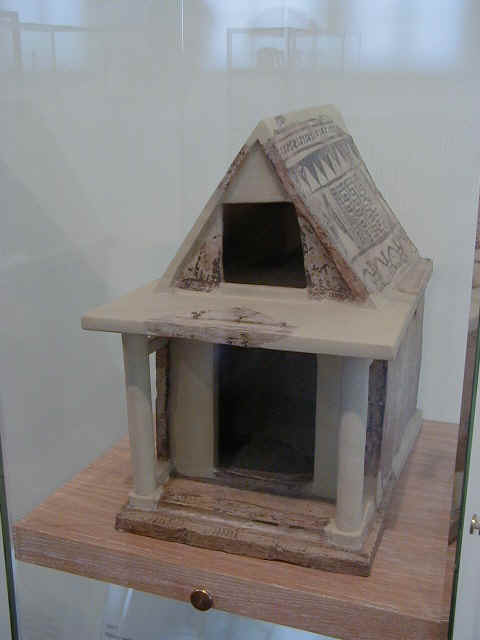

 I was surprised to see how many models the Greeks
made in clay. In the center picture are models of a game the Greeks played.
I was surprised to see how many models the Greeks
made in clay. In the center picture are models of a game the Greeks played.
 Dice
Dice

 On the left, you can see ivory offerings that were brought by wealthy
citizens to the temple. And on the right, you can see small lead offerings that
would have been brought by the poorer citizens.
On the left, you can see ivory offerings that were brought by wealthy
citizens to the temple. And on the right, you can see small lead offerings that
would have been brought by the poorer citizens.
 The remains of ivory flutes.
The soldiers fight for the body of their fallen
comrade.
 A man cowers before the riddle of the sphinx.
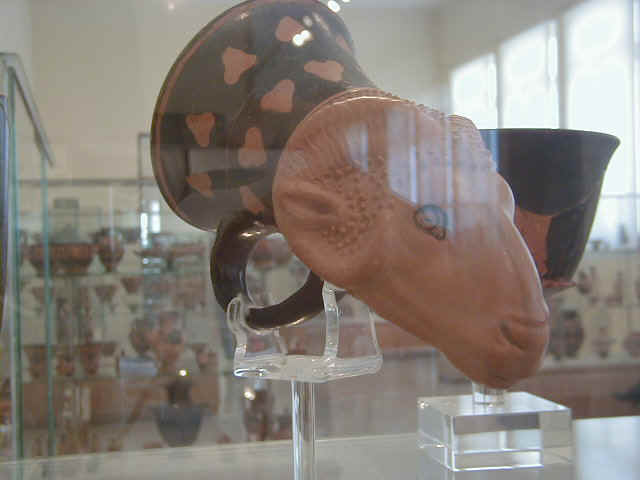 A ram's head cup
Can you identify the period of this vase?
The arts found on Greek vases covers a very wide
section of Greek life. Looking at a large number of vases will give you a good idea
of what every day Greek life was like.
 These vessels were turned from alabaster stone.
Their design is intricate and very light. They must have been very difficult
to turn.
These vessels were turned from alabaster stone.
Their design is intricate and very light. They must have been very difficult
to turn.
 On this vase, you can see a Greek grave and its
decoration.
On this vase, you can see a Greek grave and its
decoration.
 This vase shows the abduction of Helen by Theseus
when she was a young girl.
This vase shows the abduction of Helen by Theseus
when she was a young girl.
 Lyre
Lyre
 These were children's drinking vessels. Young
children were allowed to drink a mixture of wine and water.
These were children's drinking vessels. Young
children were allowed to drink a mixture of wine and water.
 A very ornate knee thimble. Knee thimbles
were used when doing handiwork.
A very ornate knee thimble. Knee thimbles
were used when doing handiwork.
 When an athlete was victorious, he was given a vase
in this shape.
When an athlete was victorious, he was given a vase
in this shape.
 Vases with handles such as these were used for
drinking wine.
Vases with handles such as these were used for
drinking wine.

 The expression on this woman's face appears
similar to the one often used for Mary in later painting.
The expression on this woman's face appears
similar to the one often used for Mary in later painting.
 This terra-cotta figure shows Aphrodite emerging
from the waves on a sea shell. Later Botticello would paint the same scene.
This terra-cotta figure shows Aphrodite emerging
from the waves on a sea shell. Later Botticello would paint the same scene.
 This vase comes from a very late period and even
contains gold gilt.
This vase comes from a very late period and even
contains gold gilt.

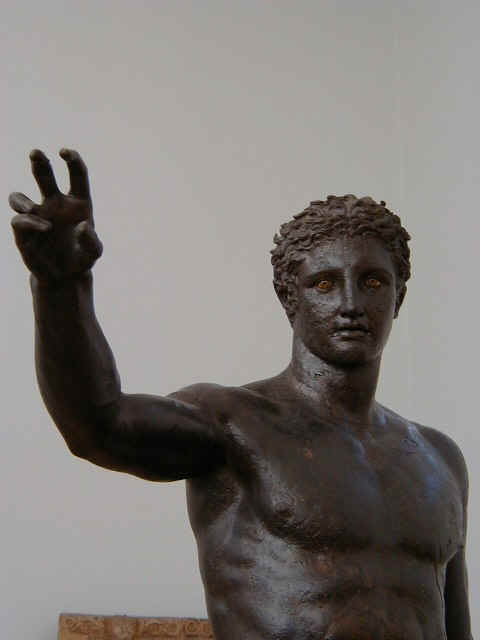


 There are a number of beautiful bronze statues in
the national Museum of that were pulled from the bottom of the sea, usually by fishermen.
The statues are remarkably well preserved and are some of the best examples of
Greek statuary that we have. Notice what a difference the presence of the eyes makes
in expression on the face of the bust.
There are a number of beautiful bronze statues in
the national Museum of that were pulled from the bottom of the sea, usually by fishermen.
The statues are remarkably well preserved and are some of the best examples of
Greek statuary that we have. Notice what a difference the presence of the eyes makes
in expression on the face of the bust.
 Charming, don't you think?
 There was a decree published after the death of
this wife of a Roman emperor stating that all statues of her must be destroyed.
Hence, the poor condition of the statute.
There was a decree published after the death of
this wife of a Roman emperor stating that all statues of her must be destroyed.
Hence, the poor condition of the statute.
 Small household altar.
Battlefield of Marathon
 On the way to Marathon, we found this bridge made
entirely of marble.
On the way to Marathon, we found this bridge made
entirely of marble.
 Near these shores, the Persians landed their ships.
 This burial mound is for the Plataeans who died at
Marathon.
This burial mound is for the Plataeans who died at
Marathon.
 This burial mound is for the Athenians who died.
 After the Greek victory at Marathon, a Greek
warrior in full armor ran over these hills back to Athens in order to bring the message of
the victory.
After the Greek victory at Marathon, a Greek
warrior in full armor ran over these hills back to Athens in order to bring the message of
the victory.
 The narrow straits between Athens and Salamis where
the Athenian navy defeated the Persions.
The narrow straits between Athens and Salamis where
the Athenian navy defeated the Persions.


 The temple of Poseidon at Cape Sounion
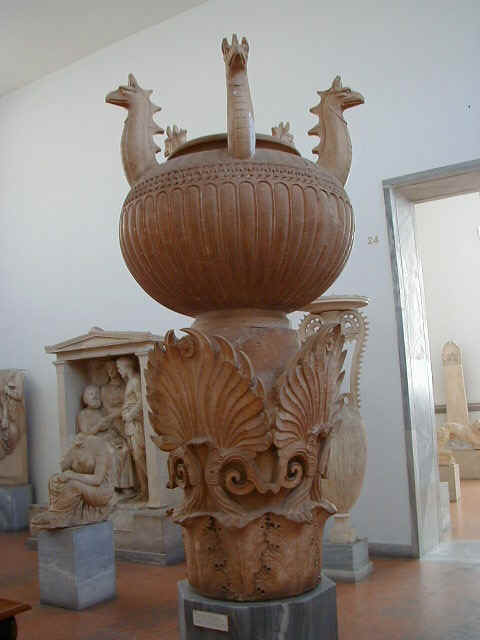
 The acanthus leaf was the inspiration for many
Greek architecthetural motifs.
The acanthus leaf was the inspiration for many
Greek architecthetural motifs.


 The faces of modern day Athens
 The Athenians appeared to need more power than the
Italians.
The Athenians appeared to need more power than the
Italians.
 Sunset over the Aegean
The Academy of Plato
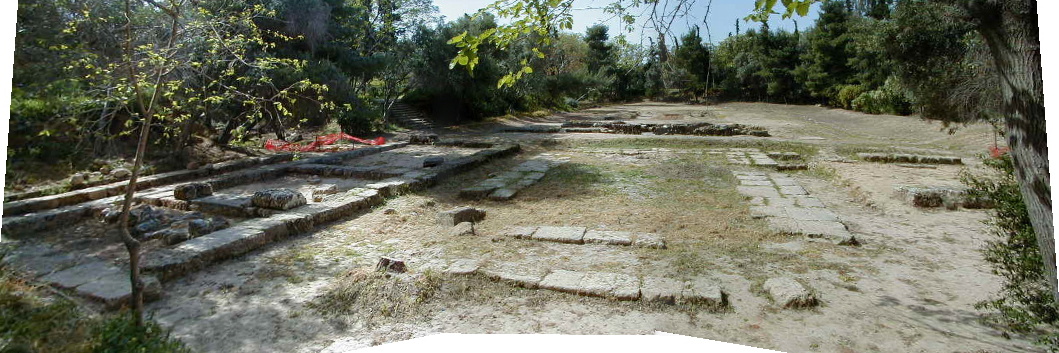 The Academy of Plato
 Section of flooring still intact from The Academy


 Various photos around the academy
 The Greeks very appropriately named the street next
to The Academy, "Euclid Street". The rigor of Euclidian geometry inspired
much of Plato's philosophy.
The Greeks very appropriately named the street next
to The Academy, "Euclid Street". The rigor of Euclidian geometry inspired
much of Plato's philosophy.